About the weather or not campaign
The weather should be a key consideration before deciding to head out on the water.
To give skippers a better understanding of weather information and support improved decision making, we’ve launched 'Weather or not', a five-year safety education campaign.
The objective of the campaign is to promote weather as a key consideration when going boating and provide skippers with clear information including:
- the best sources for weather information;
- the different elements of weather and terminology used; and,
- what the weather means and if it’s safe to be on the water.
The initial focus of the campaign was on waves, seas and swell which is now complemented by messaging about the dangers of wind and designed to address the incidence of capsize in WA waters.
Seas and swell
Looking to head out on the water? Check weather or not the sea and swell is a safe height.
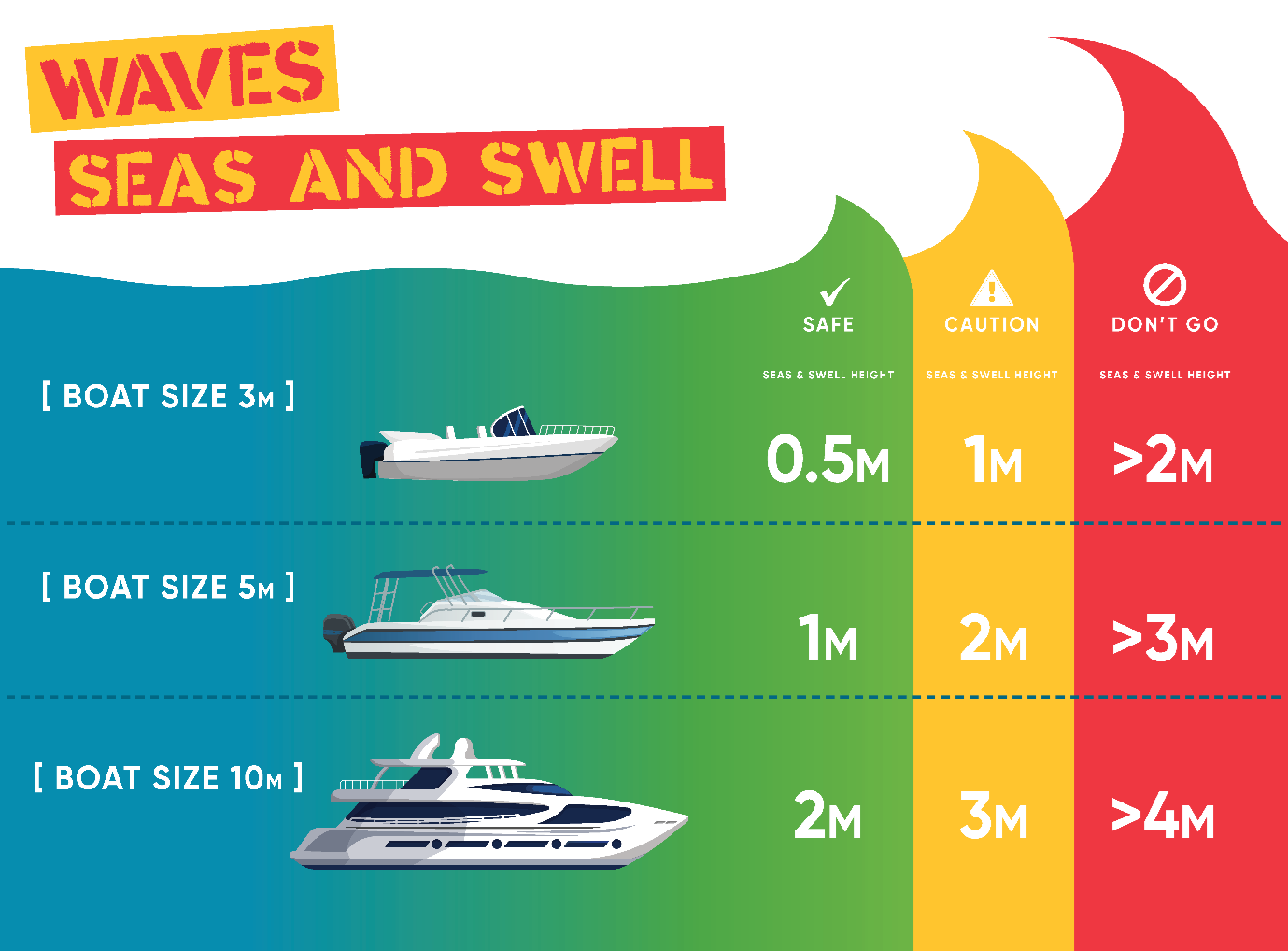
Use our 'Waves Seas and Swell' guide to see how wave height affects different vessel sizes. It’s a simple warning system to help you assess safety based on your boat and the swell forecast.
So before heading out, familiarise yourself with our guide, download the Deckee App, check our weather resources, and be ready to change your plans if conditions aren’t safe.
Waves Seas and Swell guide:
Wind
Wind is a factor in more than a third of serious boating incidents in WA.
Use our wind guide to gauge Weather or not you should be on the water.
It shows that a gentle breeze up to 8 knots is generally safe for boating, a moderate to fresh breeze up to 18 knots is usually safe if you have a vessel larger than 5 metres long while above 20 knots wind conditions are too uncomfortable and unsafe to be on the water unless your vessel is more than10 metres in length.
Common boating incidents caused by wind include capsize, collision, sinking, flooding, swamping or grounding.