

If your driver's licence or learner’s permit information has been compromised in a data breach, which occurs when unauthorised individuals gain access to sensitive personal information, you should act quickly to protect yourself from the risk of identity fraud.
The quickest and easiest way to protect your driver's licence information is by:
- replacing your driver's licence or learner's permit card, or
- placing a block on your driver's licence or learner's permit.
Protecting your identity
Your Western Australian driver’s licence is a key identity document, which makes it a target for criminals. Stolen or fake licences can be used for identity theft, fraud, or impersonation, making identity crime an increasing issue in Australia.
To better protect your identity and help prevent identity crime, Western Australia participates in the Australian Government’s Identity Verification Services, which includes the Document Verification Service (DVS), Face Verification Service (FVS) and National Driver Licence Facial Recognition Solution (NDLFRS).
What is the DVS?
The DVS is a secure, national system that enables Government agencies and approved organisations, such as banks and telecommunication providers, to verify biographical information on identity documents against the corresponding record held by a document issuing or authorised Entity.
The DVS provides a ‘yes’ or ‘no’ response as to whether certain biographical information (for example name, address, driver’s licence number) on an identity document matches the official records held by the government authority that issued the document, and that the document has not been revoked.
The DVS does not check facial images and has been available to Government agencies since 2009 and private sector organisations since 2014.
What is the NDLFRS?
The National Driver Licence Facial Recognition Solution (NDLFRS) is a secure national system enabling authorised entities to verify an individual's identity by comparing facial images stored on Australian driver’s licences.
The NDLFRS is part of the Australian Government’s broader Identity Verification Services (IVS) framework and is hosted on a secure Australian Government platform. The Department of Transport and Major Infrastructure will always retain complete control over the facial images and other identity information associated with WA driver’s licences. Further information on IVS and how the NDLFRS handles your information can be found at www.idmatch.gov.au
Why Western Australia participates in the NDLFRS
In October 2017, all Australian states and territories signed an intergovernmental agreement to participate in the Commonwealth Government’s Identity Matching Services. The purpose of this initiative is to facilitate the sharing and matching of identity information to prevent identity crime, support law enforcement, uphold national security, promote road safety, enhance community safety, and improve service delivery, while maintaining robust privacy and security safeguards.
Western Australia’s participation in the NDLFRS helps to:
- protect driver’s licence holders from identity theft and fraud;
- make it harder for criminals to use false or stolen identities;
- support accurate and secure identity checks; and
- help authorised entities confirm that a person is who they claim to be.
By verifying identity using facial matching, the system adds an extra layer of protection beyond name and document number checks alone.
What information is shared?
For the purposes of the NDLFRS, Western Australia provides limited driver’s licence information, which may include:
- your driver’s licence photograph
- your name
- date of birth
- driver’s licence number
Information such as traffic infringements, demerit points or driving history is not shared through the NDLFRS.
How the system is used
Government agencies may use the face verification service, with an individual’s express consent, to match their photo/image against a government record such as a driver’s licence or passport image.
The NDLFRS:
- cannot be used for mass surveillance
- can only be used with the express consent of the individual to whom the information relates
- does not allow general searching of the community
- provides a ‘yes’ or ‘no’ result against photo/images submitted in a match request - no images or personal information are shared
- only permits access by authorised users for approved purposes, at this stage only approved Government agencies can access the FVS and NDLFRS.
All use of the system must comply with strict legal, privacy and security requirements, including provision of the express consent from individuals to use the service.
Legal authority and privacy protections
Western Australia’s participation in the NDLFRS is authorised under the Identity Verification Services Act 2023 (Cth) and WA road law (as defined in s.4 of the Road Traffic (Administration) Act 2008) and supported by national agreements with the Commonwealth.
Your personal information is protected by:
- the Identity Verification Services Act 2023;
- Commonwealth and State privacy laws; and
- strict access controls, auditing and oversight arrangements.
All participating agencies must meet strong security standards and are subject to monitoring and compliance obligations.
Security of your information
Driver’s licence data shared with the NDLFRS is stored in a secure system hosted by the Australian Government. The system:
- meets Commonwealth information security requirements;
- has been independently assessed; and
- includes safeguards to prevent unauthorised access.
If a serious data breach were ever to occur, affected individuals would be notified in line with legal requirements.
Do you need to do anything?
No action is required from you.
Western Australian driver’s licence holders cannot opt out of participation in the NDLFRS, as it operates under state and national law to protect identity security across Australia. Your express consent will be required on each occasion an organisation seeks to verify your identity using the face verification service.
More information
You can find more information about national identity verification services and how they protect your personal information at www.idmatch.gov.au.
If you have concerns about the use of your personal information or identity security, you can also contact us or view our privacy policy.
Replace your WA driver's licence or learner's permit
All WA driver's licence cards include 2 different numbers:
- the driver's licence number on the front of the card
- a unique card number printed on the back of the card that is changed every time a new licence card is produced.
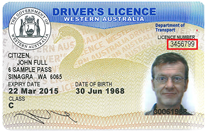
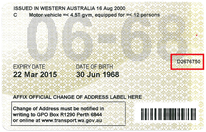
Both numbers are required for a person's identity to pass the Australian Government's Document Verification Service (DVS) check.
The DVS is used by organisations, such as financial service providers, banks and telecommunications companies to verify the authenticity of Government issued credentials.
Replacing or renewing your licence changes your card number, preventing your old driver's licence card being used to pass a DVS check.
Note: If you've renewed or replaced your driver's licence card recently and haven't provided the new card details to the organisation affected by the data breach, you may not need to replace your card again.
How to replace your card
You can order a driver's licence card or learner's permit card online using DoTDirect.
You can also replace a driver's licence at a DTMI service centre or regional agent using the Application for Replacement/Certified Copy of Driver's Licence, Learner's Permit of Learner Log Book (DL26) form.
You may need to pay a fee to replace your driver's licence card.
Note: Concession holders and clients who are victims of identity fraud can get a certified copy of their driver's licence or learner's permit, with or without a new licence number. To qualify, they need to provide proof of identity fraud, such as:
- an Identity Crime Certificate from a State or Federal Court, or
- a letter from law enforcement confirming the fraud involved their licence or permit information.
Add a block to your driver's licence or learner's permit
A driver's licence block is a feature that protects your driver's licence or learner's permit information, by controlling when they can be used for identity verification through the Australian Government's Document Verification Service (DVS).
You can add a licence block to your driver's licence or learner's permit when:
- your data has been compromised in data breach
- you have experienced identity fraud
- your driver's licence card or permit has been lost or stolen
- you are concerned about the security of your licence or permit information.
When a block is in place, any attempt to use your driver's licence for identity verification will be declined if the organisation uses the DVS. Your authority to drive is not affected by having a block on your driver's licence.
How to add and remove a driver's licence block
You can add and remove a driver's licence block anytime using DoTDirect by navigating to the Protect your identity section on the Driver's licence page.
If you have placed a block on your licence or permit and need to access a benefit or service from an organisation that uses the DVS, you will need to temporarily lift the block or use an alternative identity document.
To remove a licence block, navigate to the Protect your identity section on the Driver's licence page in DoTDirect and select Remove licence block.
Does the block apply to all cards issued by the WA Department of Transport and Major Infrastructure?
A licence block can only be applied to your driver's licence and learner's permits.
It can't be applied to WA Photo Cards and Extraordinary licences, as these documents don't verify through the DVS.
If you renew or replace your driver's licence or learner's permit, the block will remain in place until you lift it. You don't need to re-add the block when you receive a new card.
Change your licence number
If you're a victim of identity fraud that involved the use of your driver's licence or learner's permit information, you may be able to change your licence number.
Identity fraud involves someone taking over another person's identity to commit fraud or creating false identities for criminal activities. For example, identity fraud can result in someone using another individual's identity to open a bank account, get a credit card, or apply for a passport.
The Department of Transport and Major Infrastructure (DTMI) will only consider an application for a change of driver's licence number if you can provide evidence demonstrating the fraudulent use of your driver's licence details, including an:
- Identity Crime Certificate issued by a State or Federal Court; or
- Letter from a law enforcement agency confirming you have been a victim of identity fraud and that involved the use of your driver's licence information.
Your driver's licence number will not be changed if you are the victim of identity theft. Identity theft is where driver's licence details have been obtained by a third party (due to a data breach or other means), but there is no evidence of the details being used fraudulently.
How to change your driver's licence number
To apply to change your driver's licence number, you must attend a DTMI service centre or regional agent and submit an Application for New Driver’s Licence Number (E126) form.
You will also need to present:
- Primary and secondary proof of identity; and
- Identity Crime Certificate issued by a State or Federal Court; or
- Letter from a law enforcement agency confirming you have been a victim of identity fraud, and that the identity fraud involved the use of your driver’s licence information.
Once your driver's licence number is changed, you'll need to provide your new driver's licence number:
- when using our online or phone transaction services
- to other organisations that require your personal identity information (for example, banks, insurance agencies, telecommunications companies)
- to re-register for BPAY View (if applicable). We will cancel any previously held BPAY View registrations.
- in the learner's Learn&Log app (if you supervise a learner driver).
Further information
Find out more about how you can protect your identity: